



Microtrac S3500是第一个使用三个精确放置的红色激光二极管来精确描述颗粒的粒度分析仪,这是前所未有的。专利的三激光系统为各种应用提供了精确,可靠和可重复的粒度分析,利用已证明的理论的Mie补偿球形粒子和专利原理的改进的Mie计算非球形粒子。S3500测量的粒度从0.02到2800µm
使用红色和蓝色激光器进行激光衍射:BLUEWAVE
性能指标
- 三激光,红色,多探测器,多角度光学系统
- 对非球形粒子采用米氏补偿和修正米氏计算的算法
- 测量范围从0.02到2800µm
- 干湿法测量
- 封闭的光路确保光学元件的完全保护,很少或没有操作员干预
优点
- 利用三种红色激光器,增加了测量范围,为您提供了对广泛样本进行分析的灵活性
- 专利改进的Mie计算允许用户精确测量复杂的粒子,而其他粒子分析仪很难准确地描述
- 从湿测量到干测量的无缝过渡减少了停机时间
- 固定探测器坚固耐用,并确保正确的定位
- 设备占地空间小,节省实验室的宝贵空间
粒度和粒形分析器 S3500 Reviews from our customers
可靠的评估:

典型应用
适用于各种领域,例如: 饮料, 生物技术, 化学试剂, 食物, 医药品, 金属粉末, 金属, 色素, ...

化学试剂
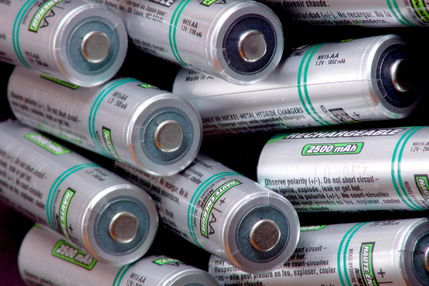
电池材料
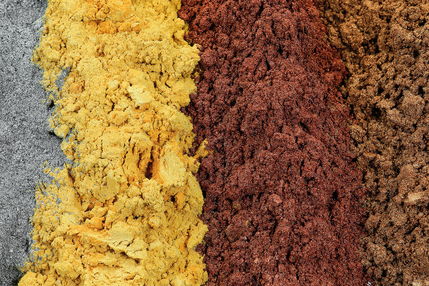
粉末
要找到满足您的颗粒表征需求的最佳解决方案,请访问我们的应用数据库
粒径分析仪 S3500 技术参数
| Measuring range | 0.02 µm - 2.8 mm |
|---|---|
| Measuring principle | Laser diffraction |
| Lasers | 3x Red 780 nm |
| Laser power | 3 mW nominal |
| Detection system | Two fixed photo-electric detectors with logarithmically spaced segments placed at correct angles for optimal scattered light detection from 0.02 to 165 degrees using 151 detector segments. |
| Data | Volume, number and area distributions as well as percentile and other summary data |
| Data format | Stored in ODBC format in encrypted Microsoft Access Databases to ensure compatibility with external statistical software applications. |
| Data integrity | Data integrity may be ensured using FDA 21 CFR Part 11 compliant security features including password protection, electronic signatures and assignable permissions |
| Measuring time | ~ 10 to 30 seconds |
| Power requirements | AC input: 90 - 132 VAC, 47 - 63 Hz, single phase 200 to 265 VAC, 47 - 63 Hz, single phase |
| Power consumption | 25 W nominal, 50 W max. (depending on options installed) |
| Environmental conditions | Temperature: 5° to 40° Celsius (50° to 95° Fahrenheit) Humidity: 90% RH, non- condensing maximum Storage temperature: -10° to 50° Celsius (14° to 122° Fahrenheit) (dry only) Pollution: Degree 2 |
| Physical specifications | Case Material: Steel and impact resistant plastic Exterior surfaces are finished with corrosion resistant paint or plating |
| Dimensions (W x H x D) | ~ 560 x 360 x 460 mm (22 x 14 x 18 in) |
| Weight | ~ 27 kg (60 lbs ) |
| Eductor air supply | 100 psi (689 kPa) maximum pressure 5 CFM (8,5 m3/h) at 50 psi (345 kPa) minimum flow rate Free of dry contaminants, moisture and oil |
| Vacuum | Vacuum must exceed 50 CFM |
粒径分析仪 S3500 资料下载
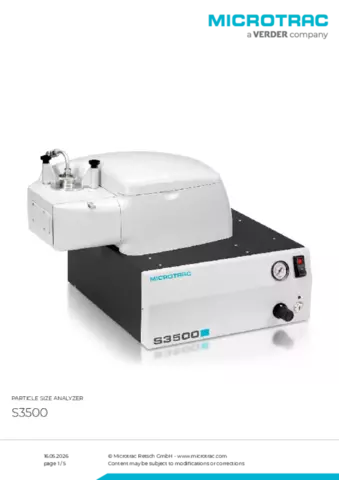
Product data sheet S3500
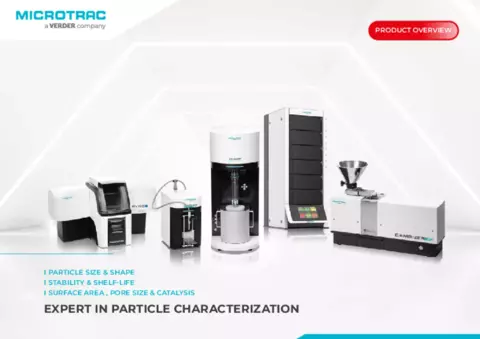
Product Overview

10 Most Common Errors in Particle Analysis - And How to Avoid Them
Particle analysis is an integral part of the quality control of bulk materials and is routinely performed in numerous laboratories. The methods used have often been established for years and are hardly ever questioned. Nevertheless, the procedure should be critically reviewed from time to time because a whole series of sources of error can negatively influence the results of a particle analysis. This white paper is intended to provide food for thought to make methods for particle characterization more reliable and accurate.

21 CFR Part 11 Compliance Matrix for Microtrac Instruments
This document explains how Microtrac FLEX software has been designed to satisfy and comply with regulations in 21 CFR Part 11 for electronic records and electronic signatures.
A Conceptual, Non-Mathematical Explanation on the Use of Refractive Index in Laser Particle Size Measurement
An explanation of Mie scattering and how Microtrac laser diffraction analyzers evaluate scattering signal from small particles.
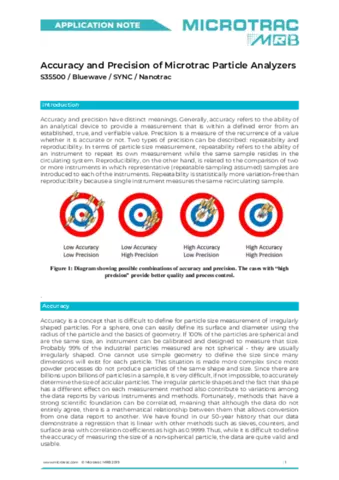
Accuracy and Precision of Microtrac Particle Analyzers
Accuracy and precision have distinct meanings. Generally, accuracy refers to the ability of an analytical device to provide a measurement that is within a defined error from an established, true, and verifiable value. Precision is a measure of the recurrence of a value whether it is accurate or not. Two types of precision can be described: repeatability and reproducibility. In terms of particle size measurement, repeatability refers to the ability of an instrument to repeat its own measurement while the same sample resides in the circulating system. Reproducibility, on the other hand, is related to the comparison of two or more instruments in which representative (repeatable sampling assumed) samples are introduced to each of the instruments. Repeatability is statistically more variation-free than reproducibility because a single instrument measures the same recirculating sample.