



AEROTRAC II是粒度分布分析仪&空气中悬浮微粒如雾化液滴、粉末、喷雾粒子、雾等的浓度比分析(通过透射激光计算)。
喷雾颗粒和喷雾液滴大小分析仪 AEROTRAC II 优点
- 宽分布应用
- 针对多种应用的测量模式
- 按键启动(通过键盘手动操作)
- 自动启动(检测到微粒散射光时自动启动)
- 测量从外部信号输入开始
- 0.02msec~可在短时间内准确分析颗粒
- 标准配置多重散射校正软件
- 该仪器可在有限的空间内安装
- 配备了半导体激光器
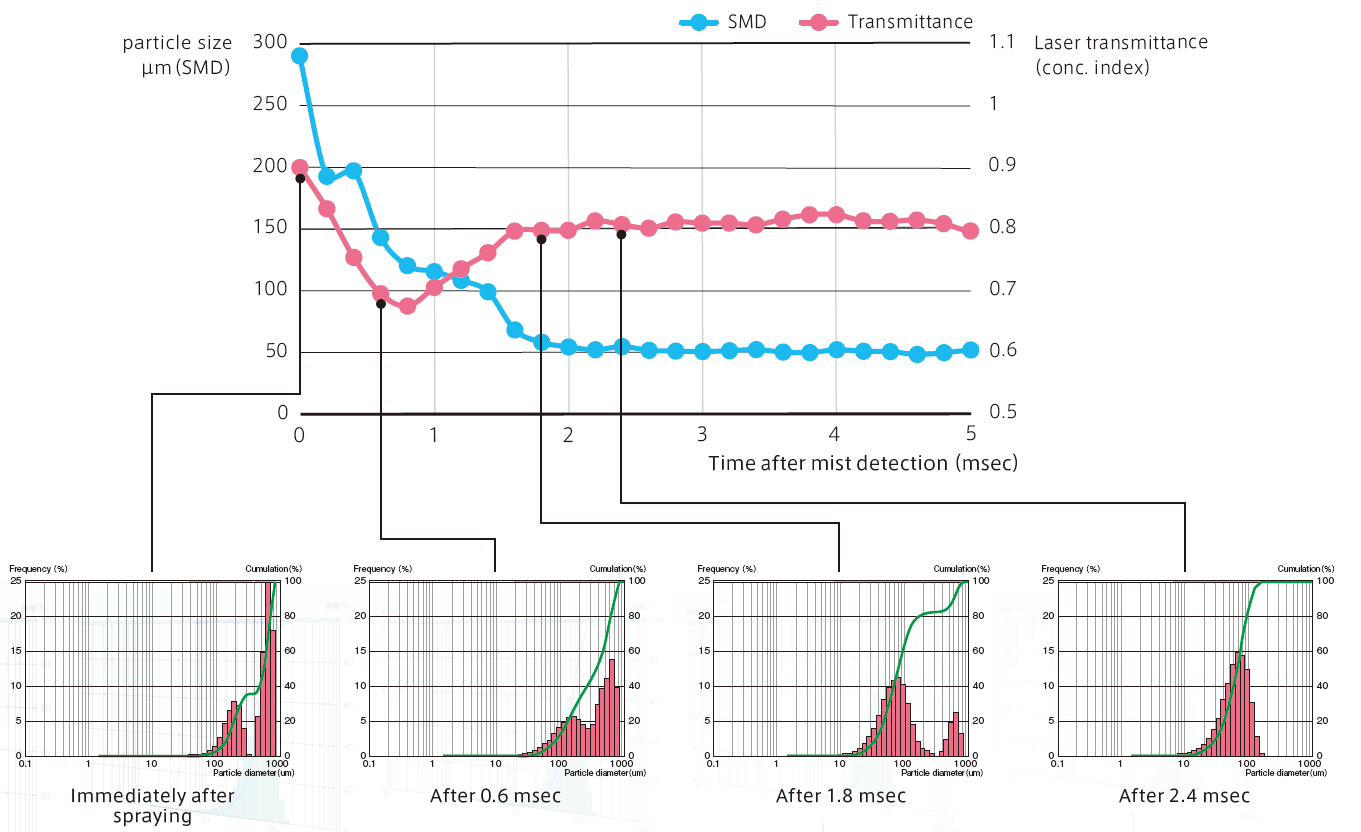
测量举例 喷雾的时间变化分析
喷雾颗粒和喷雾液滴大小分析仪 AEROTRAC II 附件和选项
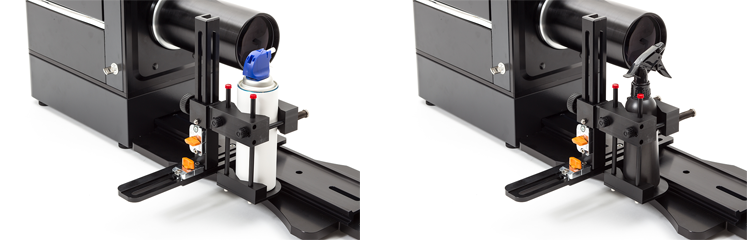
固定夹具,以支持各种类型的喷涂
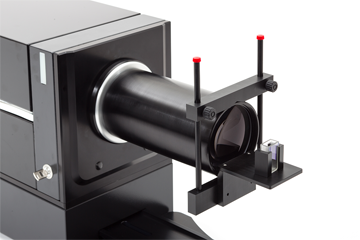
湿法测量使用一套样品池
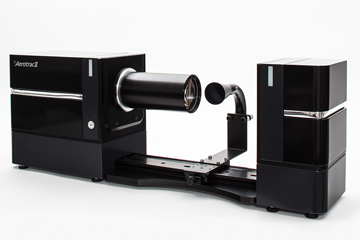
干法测量
典型应用
AEROTRAC II 可用于多种领域,包括来自注射器、雾化器、杀虫剂、乳液、加湿器、雾分离器、粉末涂料和各种粉末的液滴。
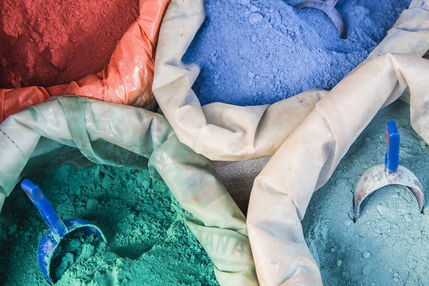
色素
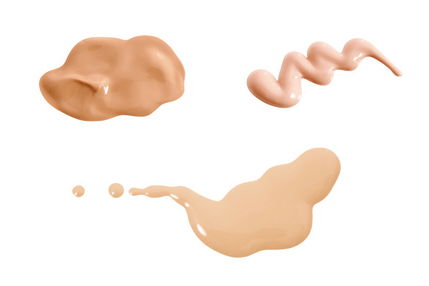
lotions
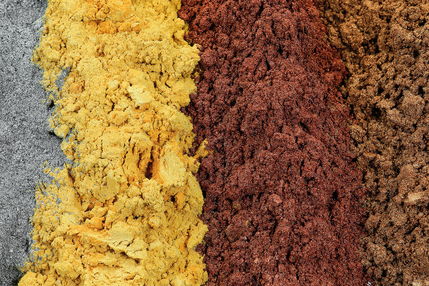
粉末
要找到满足您的颗粒表征需求的最佳解决方案,请访问我们的应用数据库
喷雾颗粒和喷雾液滴大小分析仪 AEROTRAC II 技术参数
| Measurement principle | Laser diffraction |
|---|---|
| Measuring range | F100 lens: 0.5 to 350 µm F300lens: 1.4 to 1000 µm F600 lens: 2.8 to 2000 µm |
| Light source | Semiconductor laser Wavelength: 635 nm Output: 3.5 mW Laser class: CLASS 3R |
| Detector | 32-element ring detector (with automatic optical axis adjustment function |
| Measuring time | Spray measurement: 0.02 to 500 msec Continous measurement: 1 to 600 sec |
| Number of measurements | Spray measurement: 1 to 100 times Continous measurement: 1 to 9,999 times |
| Data | Particle size distribution (frequency/cumulation), summary data (D50% particle size, SMD, mode diameter etc.) density index |
| Sample Cell | Material: Tempax glass (with coating) Capacity: 5 to 7 ml |
| Environmental conditions | Ambient temperature: 10 to 35 °C Ambient humidity: 20 to 80% R.H. (no condensation) |
| Power requirements | 85 to 264 VAC, 47 to 63 hz |
| Dimensions (W x H x D) | Light emission module: 170 × 230 × 240 mm Detection module: 595 × 230 × 240 mm For connected modules (option): 1000 × 230 × 340 mm, 27 kg |
| Weight | Light emission module: 5.5 kg Detection module: 11.5 kg (with F300 lens attached) For connected modules (option): 27 kg |
| Operating unit | Windows PC (including laptop PC) |
喷雾颗粒和喷雾液滴大小分析仪 AEROTRAC II 资料下载
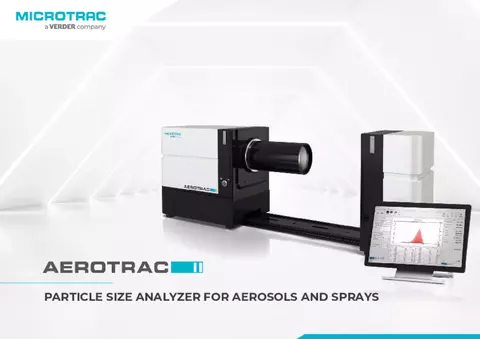
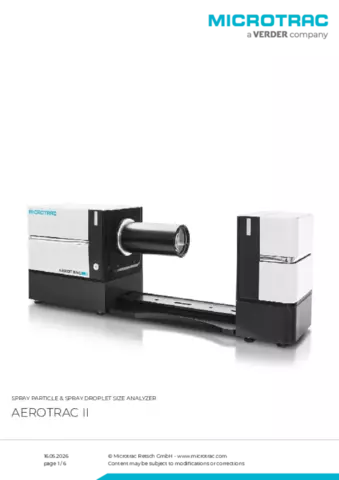
Product data sheet Aerotrac II
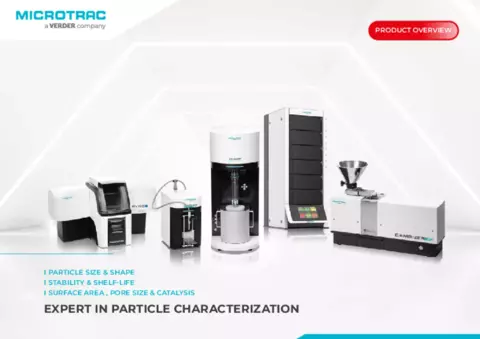
Product Overview
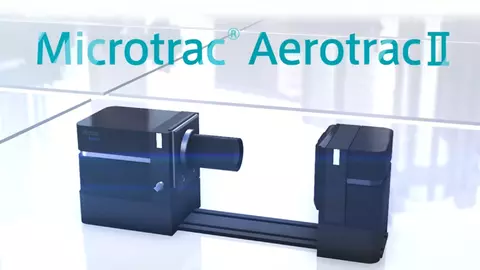
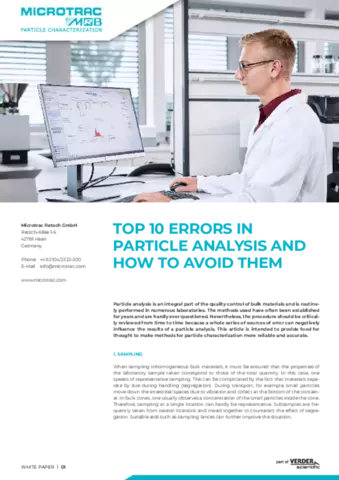
10 Most Common Errors in Particle Analysis - And How to Avoid Them
Particle analysis is an integral part of the quality control of bulk materials and is routinely performed in numerous laboratories. The methods used have often been established for years and are hardly ever questioned. Nevertheless, the procedure should be critically reviewed from time to time because a whole series of sources of error can negatively influence the results of a particle analysis. This white paper is intended to provide food for thought to make methods for particle characterization more reliable and accurate.
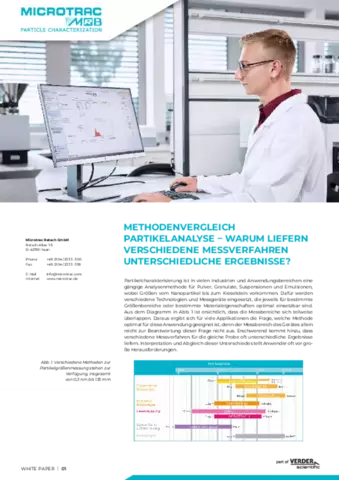
White Paper: Methodenvergleich Partikelanalyse
Warum liefern verschiedene Messverfahren unterschiedliche Ergebnisse? Partikelcharakterisierung ist in vielen Industrien und Anwendungsbereichen eine gängige Analysenmethode für Pulver, Granulate, Suspensionen und Emulsionen, wobei Größen vom Nanopartikel bis zum Kieselstein vorkommen. Dafür werden verschiedene Technologien und Messgeräte eingesetzt, die jeweils für bestimmte Größenbereiche oder bestimmte Materialeigenschaften optimal einsetzbar sind, wobei sich die Messbereiche teilweise überlappen. Daraus ergibt sich für viele Applikationen die Frage, welche Methode optimal für diese Anwendung geeignet ist, denn der Messbereich des Gerätes allein reicht zur Beantwortung dieser Frage nicht aus. Erschwerend kommt hinzu, dass verschiedene Messverfahren für die gleiche Probe oft unterschiedliche Ergebnisse liefern. Interpretation und Abgleich dieser Unterschiede stellt Anwender oft vor große Herausforderungen. In diesem Whitepaper sollen die gängigen Methoden der Partikelanalyse zunächst vorgestellt und dann miteinander verglichen werden.