




Different particle measurement methods for the characterization of particle size distributions in granulates, bulk materials, powders and suspensions exist. These include laser diffraction, image analysis, dynamic light scattering as well as sieve analysis.
Particle measurement with these different methods leads to different results, because the "size" of particles can be interpreted quite differently: Size is unambiguously defined only for spherical particles (diameter = particle size). In all possible measuring directions, the same result is obtained.
For non-spherical particles, however, the result of the particle measurement depends both on the orientation of the particles during the measurement process and on the peculiarities of the method used. Since the result of a particle measurement depends on how "size" is defined, there is often confusion in the interpretation of the measurement results.
With an extensive understanding of the strengths and weaknesses of each method, Microtrac offers an unrivalled product range of technologies for particle measurement. Our experts will be happy to assist finding the right solution for your application.
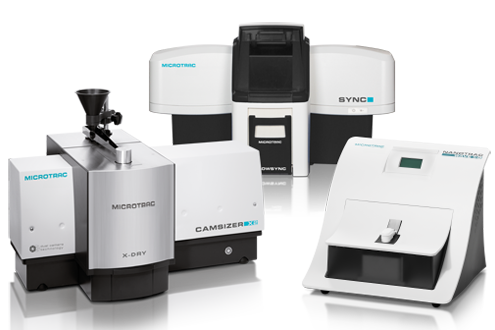
Microtrac提供满足各中颗粒分析技术的设备
Particle measurement with sieve analysis
The example below shows particle measurement of two objects, a lego brick and a grinding ball, with two techniques: Sieve analysis and caliper. With the caliper gauge, different sizes are measured depending on the orientation of the brick, while the grinding ball always has the same diameter.
The result of this particle measurement is in any case: the two objects are different in size. Sieve analysis shows that both objects fit through a sieve with 16 mm aperture, while they are retained by a sieve with a mesh size of 14 mm. Sieve analysis thus characterizes both particles as the same size: they have the same equivalent diameter between 14 mm and 16 mm. It is not possible to be more precise, because there are no intermediate sieves.
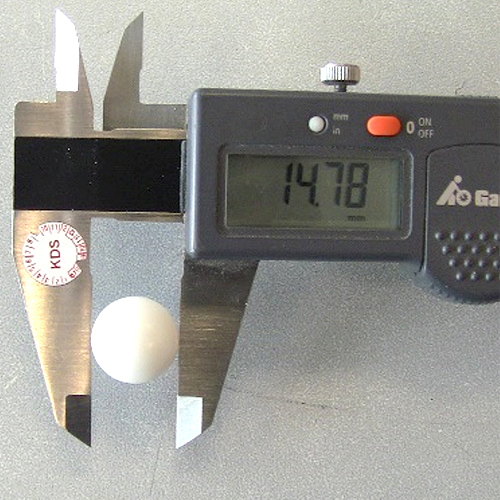
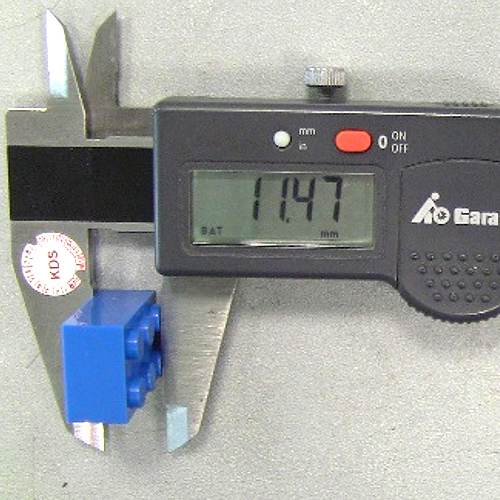
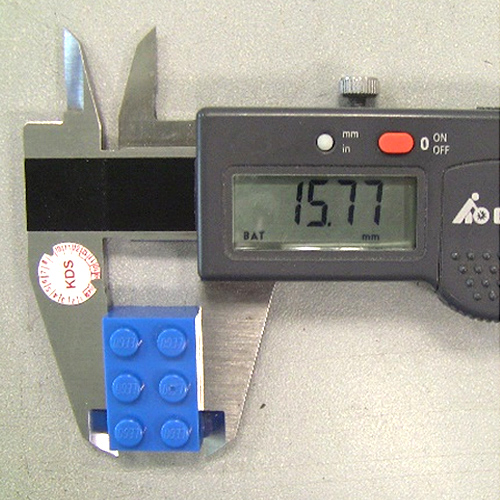
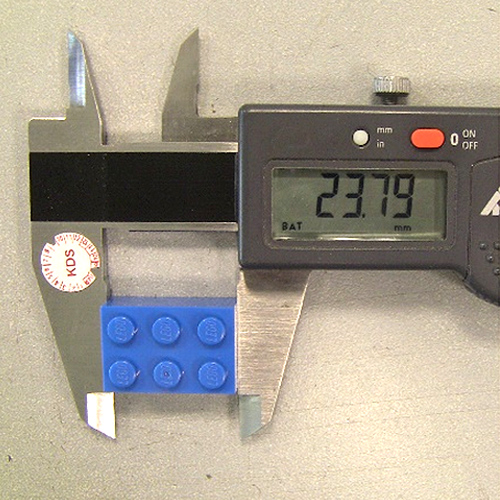
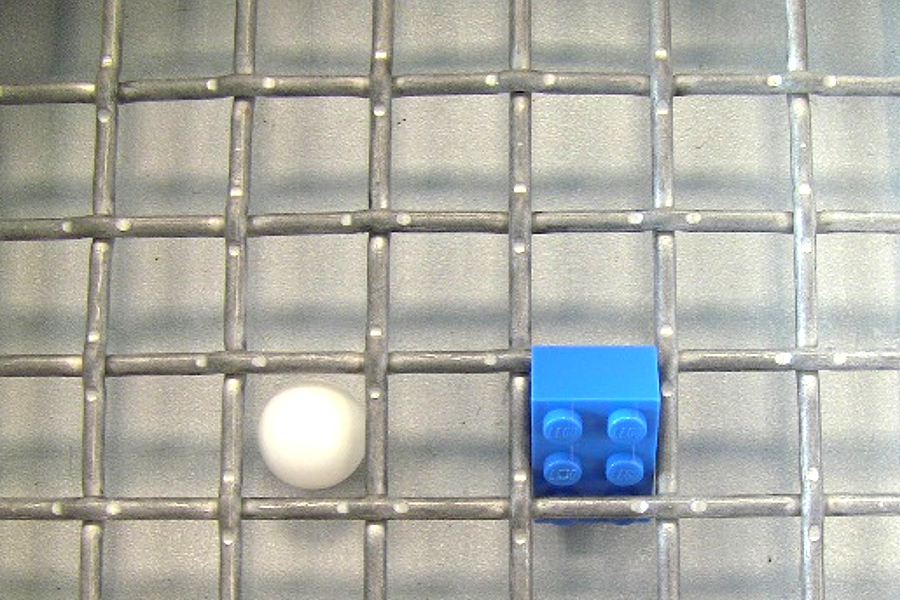
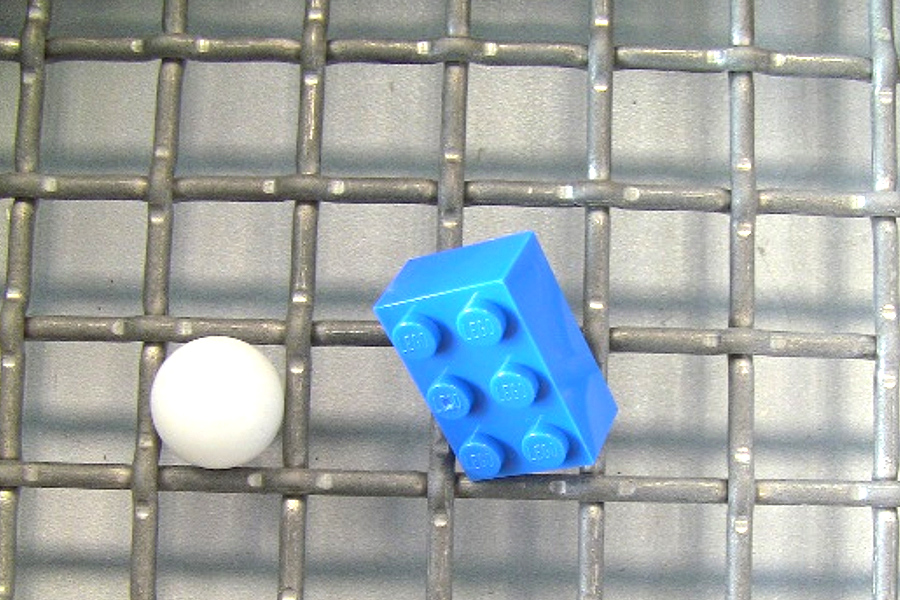
In sieve analysis, the classical and most commonly used method of particle measurement, the sample is separated by size and the amount of sample in each fraction is determined by weighing. As particles encounter the mesh of the sieve cloth in different orientations during the sieving process, they ideally pass through any mesh until they are retained by apertures smaller than their smallest projected area. Particle measurement with sieve analysis thus always involves a certain preferred orientation of the particles, tending to be a measurement of particle width.
TURBISCAN 技术
在物理测试方面,麦奇克拥有最广泛的顶级分析仪,可帮助您进行全面和信息丰富的测试,以改善您的产品范围。
TURBISCAN 系列具有老化、保质期、分散性、再分散、相分离、不稳定和聚集测试的设备,涵盖了您产品中潜在物理不稳定性的全部情况。
Microtrac 认识到许多在现代实验室中工作的挑战,例如小尺寸仪器和快速数据分析的重要性。因此,所有 TURBISCAN 设备在设计时都考虑到了速度和效率,旨在最大限度地减少实验室占地面积。它们配备了一键式稳定性评估功能。
TURBISCAN 系列专为用户友好而设计,无需专业作员,提供 20 至 60 °C 的测试条件,确保您的产品在上市后在任何环境中的稳定性。包括定量分析简化了产品比较,并允许您衡量工艺改进和设计更改的有效性。>><<包括TURBISCAN TOWER和TURBISCAN TRILAB在内的多种仪器可以执行各种类型的测量和测试,TURBISCAN LAB被公认为稳定性分析的全球标准。
要了解如何通过使用更准确的定量数据加速稳定性研究来超越竞争对手,请立即联系我们。我们的专家团队将概述为什么 TURBISCAN 可以成为满足您物理稳定性测试需求的理想解决方案。

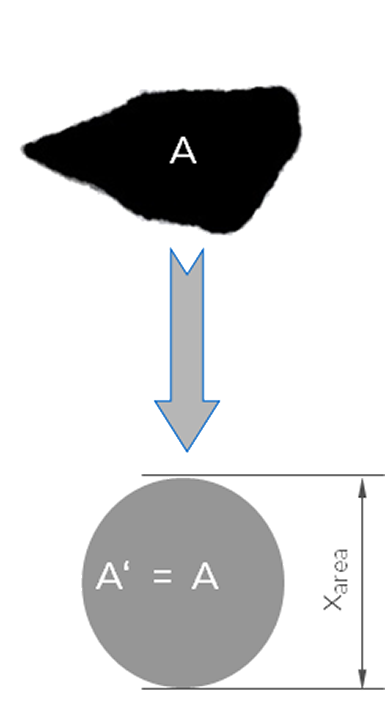
Different size definitions in image analysis. Xc min (particle width, red), Xarea (diameter of the equal area circle, green) and XFe max (particle length, blue). Depending on the selected size definition, a different measurement result is obtained (cumulative curves on the right)
xc min
"Width"

xarea
"Diameter of circle with same projection area"
xFe max
"Length"
3D Particle Measurement with Tracking Technology
In many image analysis methods for particle measurement, each particle is recorded only once in random orientation. Especially for particles with a defined geometry, such as lenses or rods (e.g.: extrudates), it is very likely that the relevant projection is not captured during the acquisition: for example, rods tend to be measured "too short" with random orientation.
To evaluate only the ideal projection during particle measurement, it has proven useful to record the particle several times as it passes through the analyzer's measurement zone. From the sequence with several orientations, the one showing the ideal orientation, e.g. the longitudinal extension in the case of rods, is selected for particle measurement. This also ensures that a circular particle projection actually represents a spherical particle and is not a half-sphere or lens that happens to show a circular cross-section.

Particle measurement with Laser Diffraction
There are some fundamental differences in particle measurement by laser diffraction compared to image analysis.
While in imaging techniques each recorded particle represents a measurement event and is included in the overall result, scattered light or diffraction analysis are so-called ensemble measurement techniques. This means that the measurement signal is generated simultaneously by many particles of different sizes.
It is therefore a superposition of angle-dependent scattered light intensities, from which the contributions of the different particle sizes must be calculated. This is done either via the Mie theory, for which the refractive index of the particles must be known, or via the Fraunhofer approximation, which, however, is only usefully applicable for larger particles.
Particle measurement by laser diffraction cannot distinguish between length and width. All scattered light data are referred to a spherical model, they are so-called equivalent diameters. For non-spherical particles, this usually results in a wider distribution being output than in image analysis.
Particle measurement with Dynamic Light Scattering (DLS)
Dynamic Light Scattering (DLS) is a method for particle measurement which is particularly suitable for the analysis of nanoparticles. Sample materials include suspensions and emulsions, dry samples cannot be analyzed. An advantage of this method is that particle measurement can be carried out in a very wide concentration range from a few ppm to ideally 40% by volume.
A special feature of particle measurement with dynamic light scattering is, that a so-called hydrodynamic diameter is determined. This hydrodynamic diameter indicates the size of a sphere that has the same diffusion properties in a liquid as the real particle. It follows that the particle shape is not determined here either.
Moreover, when the particle diffuses in the liquid, not only the particle itself moves, but also some of the surrounding molecules of the dispersing medium, which means that the hydrodynamic diameter is always slightly larger than the actual particle diameter. In particle measurement with dynamic light scattering, the diffusion coefficient is determined and the hydrodynamic particle diameter is calculated via the Stokes-Einstein equation.

Comparability of particle measurement with different methods
Image Analysis and sieve analysis: very good comparability when image analysis considers particle width during image evaluation. 3D analysis improves the comparability. Particle measurement by image analysis can completely replace sieving!
Image Analysis and Laser Diffraction: Good comparability. Laser diffraction often shows wider distributions, especially for strongly irregular shaped particles. For image analysis, the definition xarea should be used.
Sieve analysis and Laser Diffraction: poorly comparable, laser diffraction tends to give a larger result.
Laser Diffraction and Dynamic Light Scattering: compares well, for small particles (< 100nm) DLS is better, for large particles (>1µm) laser diffraction is superior.
联系我们获取免费的建议

最终选择使用简单的筛分、激光衍射或者使动态图像技术 主要取决于测试的样品量、预算、人员、客户要求和采用的国际标准。 为何不联系Microtrac进行免费咨询,看看哪种解决方案能带来您所需要的结果和投资回报。