




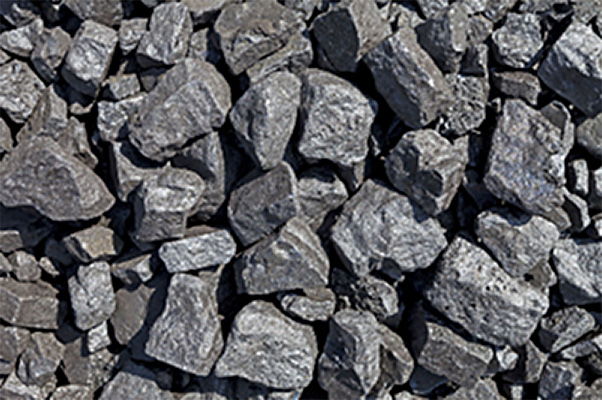
硅铁 (FeSi) 是一种铁和硅的合金,硅含量在 10% 到 90% 之间变化很大。它在钢铁生产中用作所谓的中间合金,少量添加以调整熔体、冷却过程和成品的性能。
硅铁的主要优点是其脱氧效果(即它可以减少金属氧化物中的金属),但也有助于防止碳的损失。此外,硅铁还用于电极涂层以及硅、氢和镁的生产。
硅铁是在高炉或电弧炉中通过在铁存在下用焦炭还原石英砂 (SiO2) 生产的。熔体从炉中倒出,凝固成平板。
冷却后,该片材由适当的机械粉碎,然后在破碎机中进一步加工。生成的 粒度分布范围从细尘状颗粒到厘米大小的块状。硅铁被筛成不同尺寸的等级,以备进一步使用。
麦奇克的CAMSIZER系列非常适合粒度分布分析 硅铁和其他颗粒金属。Microtrac 分析仪既可用于质量控制、工业应用,也可用于研究目的。
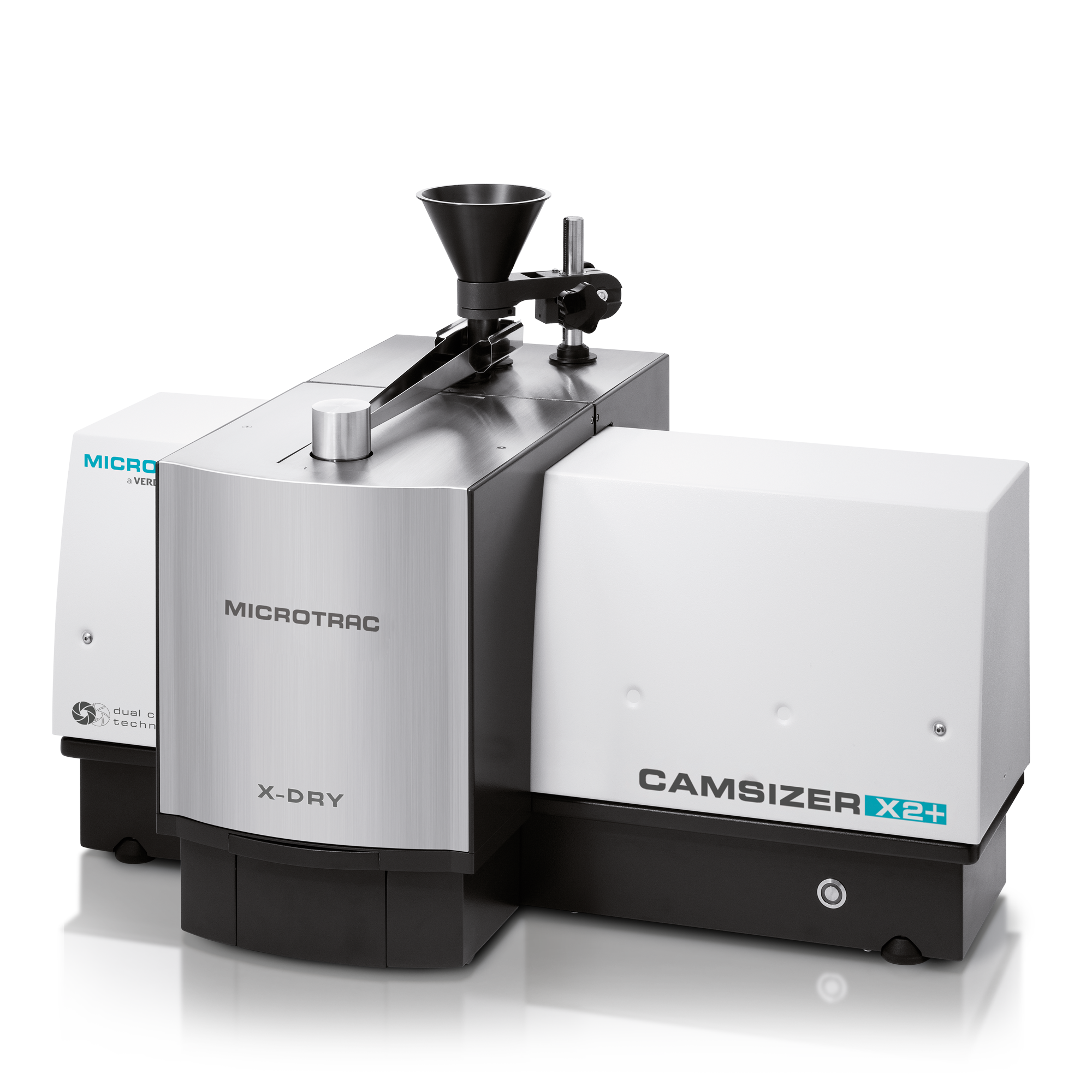
了解有关本应用说明中使用的 Dynamic Image Particle Analyzer 的更多信息。
用CAMSIZER P4作动态图像分析
The CAMSIZER P4 dynamic image analyzer determines particle size and shape in a range from 20 μm to 30 mm and is therefore ideally suited for the routine analysis of ferrosilicon. The particles under investigation are conveyed by a vibratory chute into the measurement zone where they are passing a planar light source in free fall. The resulting shadow projections are captured by a camera system and evaluated in real time. The CAMSIZER P4 features the unique Dual-Camera Technology. One camera (ZOOM) detects fine particles with great accuracy and a second camera (BASIC) with lower magnification, but larger field of view detects large particle simultaneously. This is an invaluable advantage because the CAMSIZER P4 can analyze all particles within one sample without any hardware adjustments and without losing accuracy for either very large or very fine particles. Thanks to the two cameras, ideal measurement conditions can be established for the entire size range, the analysis is therefore extremely convenient and accurate.
The huge advantage of this arrangement is the vast amount of sample that can be processed in a very short analysis time of only a few minutes. The CAMSIZER P4 is maintenance-free and therefore offers a faster and more reliable alternative to traditional sieve analysis. Thanks to its robust design, the CAMSIZER P4 unsusceptible to vibration and dust. The instrument can therefore operate in an industrial plant as well as in a laboratory environment.

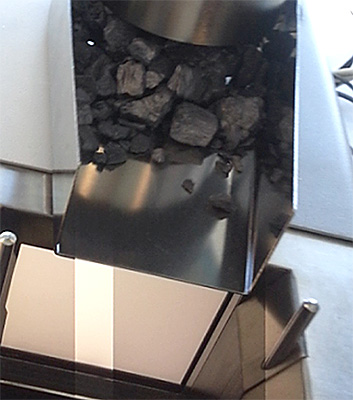
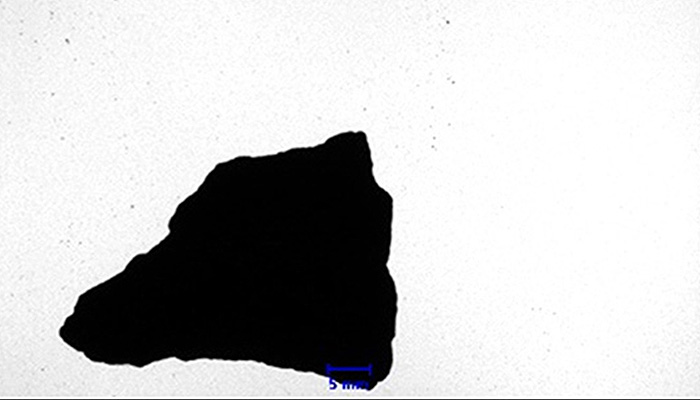
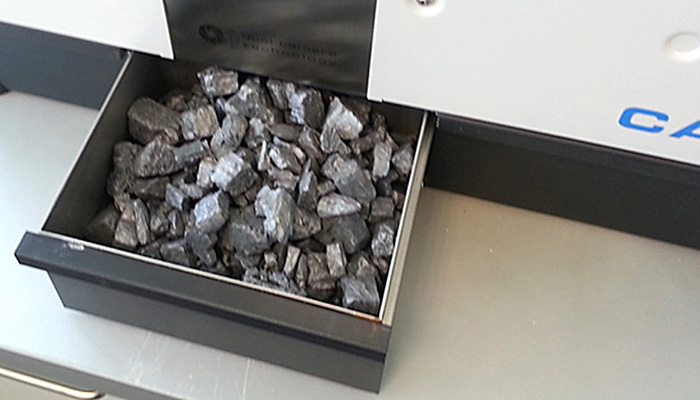
图 3
Ferrosilicon chunks on the feeding chute of the CAMSIZER P4 (left), ferrosilicon particle on a CAMSIZER P4 live image (middle), ferrosilicon sample in the collector box after the measurement (right).
测量示例:不同等级的 FeSi
In this example we present the results of the particle size analysis of different grades of ferrosilicon (Fig. 4). All measurements have been made with a CAMSIZER P4 image analyzer. The finest sample is in a size range from 0,2 mm to 0,7 mm. The largest sample contains particles up to 30 mm, which is the upper size limit of the CAMSIZER P4. Repeatability of the results is a key factor to evaluate the reliability of a measurement device. The CAMSIZER P4 can detect and analyze hundreds of thousands or even millions of particles within a few minutes. The size distribution is therefore based on a huge dataset, giving the result a high confidence level and leading to great repeatability (Fig. 5).
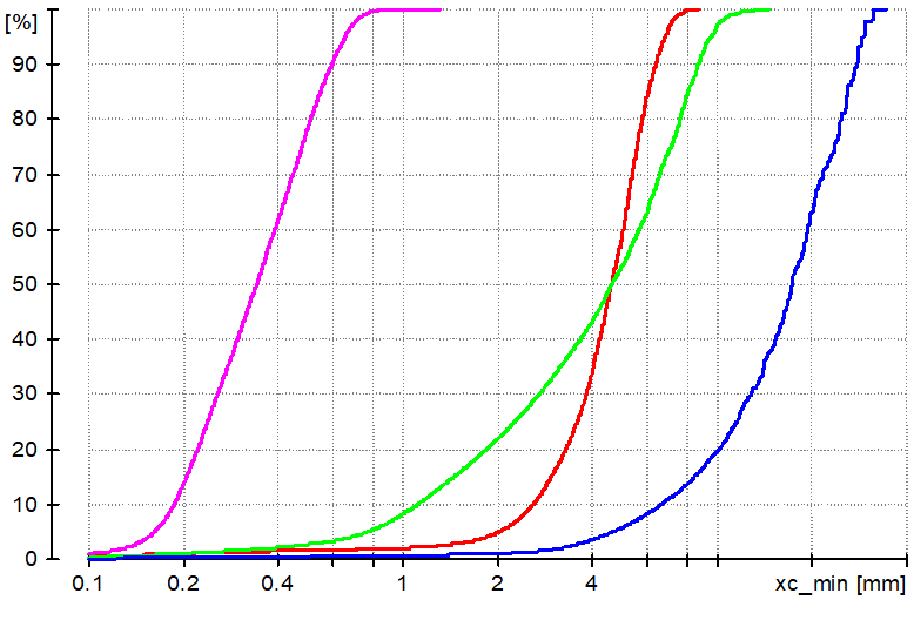
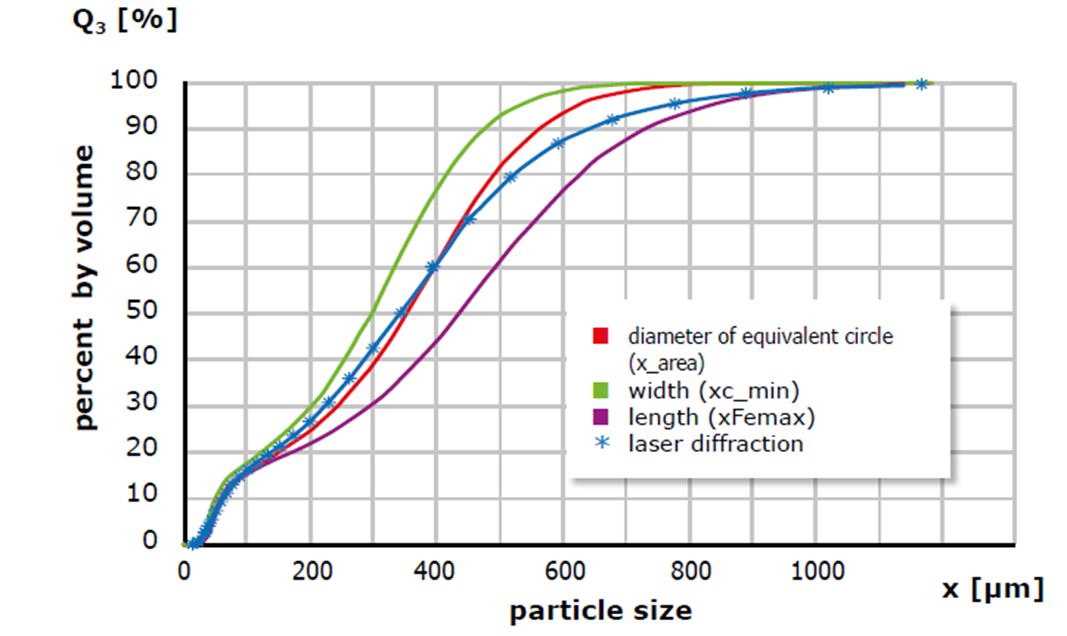
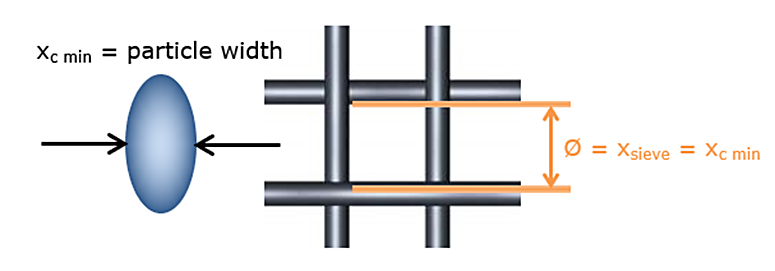
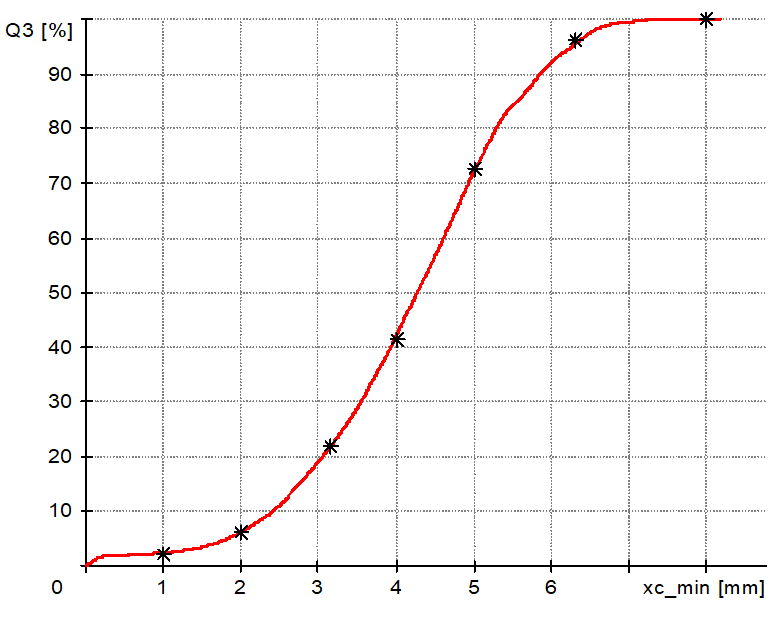
Particle characterization with Dynamic Image Analysis offers a wide range of different parameters that can be determined for every particle: different size definitions for length, width and equal area diameter are available, as well as various shape parameters such as aspect ratio, roundness, convexity and many more. If comparability to traditional sieve analyse is required, the size definition “particle width” is used to calculate the distribution. Sieving allows width measurement as well since the particles pass the apertures with the smallest projection surface (Fig. 6). Comparability of CAMSIZER P4 results and sieve analysis can easily be established (Fig. 7).
Summary
The CAMSIZER P4 is ideal for the measurement of ferrosilicon and other granular metals in a size range from 20 μm to 30 mm. This is achieved by the implementation of the unique dual-camera-technology: two cameras with different magnification and image size measure large and small particles simultaneously. Therefore, the entire measurement range is available for every analysis without any modifications to the optical system. By choosing the right evaluation parameters, a perfect correlation to sieve analysis can easily be established. Product specifications that are usually based on sieve results can remain unchanged.
联系我们获取免费的建议

最终选择使用简单的筛分、激光衍射或者使动态图像技术 主要取决于测试的样品量、预算、人员、客户要求和采用的国际标准。 为何不联系Microtrac进行免费咨询,看看哪种解决方案能带来您所需要的结果和投资回报。