




In case of the example of cylindrical pore with the radius r and length L, the pore surface area and volume are calculated from the following equations:
Cylindrical pore
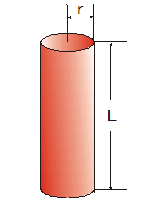

Differential values are expressed as follows:

The following graphs are the examples of BJH analysis of BAM-PM-103 reference material obtained from the nitrogen gas adsorption isotherm.
Pore length distribution
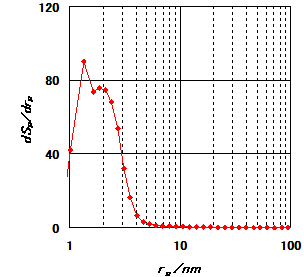
Pore surface area distribution
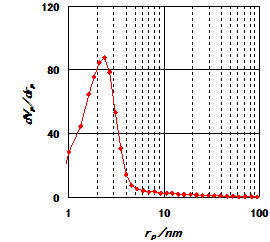
Pore volume distribution
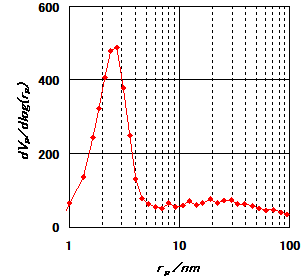
They look quite different, but mathematically, the length distribution has more weight on smaller pores and volume distribution has more weight on larger pores. Conventionally, the gas adsorption uses the area distribution and mercury porosimetry uses the volume distribution. This difference comes from the fact that the gas adsorption is useful to determine the surface area and mercury porosimetry is useful to determine the pore volume. Recent analysis software has a function to switch these distributions, and it is possible to select them depending on the research. The volume distribution is suitable for the research of adsorbent and evaluation of adsorption capacity during the adsorption process.
The area distribution is useful for comparing the area of reactive sites on the catalyst or during the reaction process. The length distribution is suitable for the evaluation of pore depth.
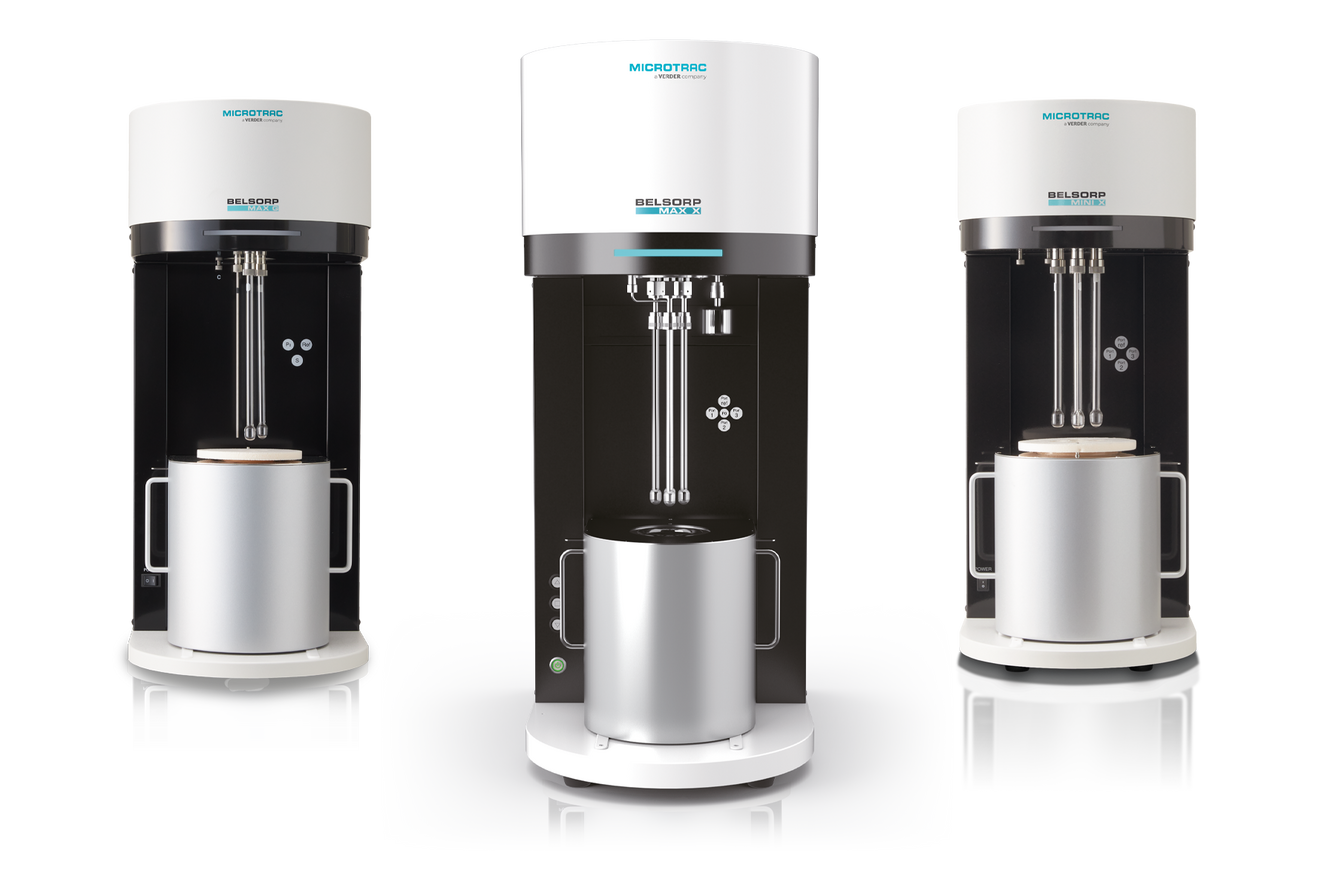
A Microtrac oferece uma ampla linha de instrumentos para medição de adosrção de gases
Contate-nos para uma consulta gratuita

Finalmente, a opção entre adotar uma solução simples por peneiramento ou investir em uma análise por difração de laser ou dinâmica por imagem dependerá do volume de testes, do orçamento, do pessoal disponível e dos padrões internacionais específicos ou necessidades da clientela a considerar.
Que tal contatar a Microtrac para uma consulta gratuita a fim de definir qual solução proporcionará o resultado e o retorno de investimento necessitados?